Home Up Contents

Dr. Wilson
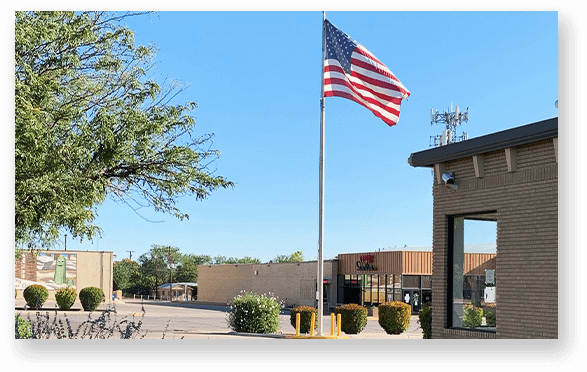
Welcome to the Garcia Opera House. located in Socorro, New Mexico. The historic Opera House was originally built in 1881 and is currently operated by the Garcia Opera House Foundation, located at First State Bank. The Opera House is still in use for community events and private bookings including fundraisers, weddings, dinners, performances, etc.


The following article is by Dr. Spencer Wilson ...

The Glory Years

The decade of the 1880's were the boom years for Socorro. The arrival of the Atchison, Topeka & Santa Fe Railroad, the opening of the mines in the mountains to the west, the building of two smelters and a crusher mill, farming and ranching in the surrounding countryside, and the removal from the immediate vicinity of raiding Indians, all conspired to create those boom times. The town on the banks of the Rio Grande grew from a few hundred to over 4,000. The increase in population and business prompted a building boom in houses and commercial structures . . .and two opera houses! One was a brand new building while the other was a converted furniture store.

In January 1886, a group calling themselves The Socorro Opera House Company bought the Robbins & Modie Furniture building of Fischer Avenue. At a business meeting, the owners of the Opera House Company prepared to convert the S.C. Modie & Company store. They announced for a "permanent stage" and flooring of "hard wood." The building was to be ready that same month. The January 2 issue of the Socorro Bullion in 1886 noted:

The want of a public hall has been seriously felt in the community upon more than one occasion, and we are happy to note that our live citizens have supplied the want . . .

The Company planned to hold a grand opening on March 5th, with the Edward Clifford dramatic group providing entertainment. The first play was to be "Davy Crockett" followed, on the second night, by "Monte Cristo" and closing each performance with a "roaring farce."

There was, however, a hitch in their plans when it was learned, and published , that a Mr. Essington, "who claimed to be the advance agent of the Clifford Dramatic Company," was no longer employed by the Company . . . so the whole thing was canceled. 

The other new opera house was conceived by Mr. & Mrs. Juan Nepomocano and Francesca Garcia of Socorro. The Garcia Family were important people, as descendants of those original families who settled the Socorro Grant, and equally in commercial ventures in the area. Their spacious hacienda occupied a prominent place on the plaza and on the street from the plaza to the Church. 

Just exactly when the Garcias thought of building a major structure in the town is unknown. By May 22, 1886, however, the May 22 issue of the Socorro Bullion in 1886 reported:

Mrs. Frances Garcia is erecting a hall for entertainments, and when completed, it will be 124 feet by 24 feet, and will be finished in hard wood. She is now receiving bids for the carpenter work. There will be a stage and dressing room attached and it is her object to make it the finest hall of its kind in the city.

Only January 22, 1886, the paper reported that according to some accounts, the building was already under construction when Mr. Garcia suddenly died leaving all of his property to a niece, "who is also his adopted daughter . . . (and) to (his) wife." Francesca and Luis M. Baca were the executors of the estate.

Later that summer, Mrs. Garcia commissioned an Albuquerque artist, a Mrs. Albright, to do crayon, "life size," portraits of her "late husband," the niece and herself. The paper reported that the portraits were "simply perfect," at $100.00 each. Obviously, Mrs. Garcia could afford them and, presumably, to continue to work on the opera house. Construction continued apace. On September 4, 1886, the paper reported:

The Garcia Opera House now being erected in this city, when completed will be the largest edifice of the kind in the southwest.

The editor of the Bullion was not at all bashful in touting the building as the "largest edifice" in the whole southwest. After all, Socorro was booming. There was talk of railroads branching out in all directions, east to the rich mines at White Oaks, and west to Arizona Territory with other lines into the Gila Mountains. Socorro was to be the "Hub City" of New Mexico. Why, even the territorial capital was supposed to be moved from Santa Fe to Socorro. So the "largest edifice" was a natural for the "Hub City."

That same month the paper reported that plans were being laid for a grand celebration . . . "Monster Concert" and one hundred musicians were being called for.

The new, elegant and spacious Opera House in Socorro, with a seating capacity of 800 persons . . . will be initiated on the 1st of December, 1886, by the coming Socorro Musical festival composed of 100 musicians, followed by a grand dance and supper.

Again, in October headlined the "Monster Concert" and the multitude of musicians. This would require, said the paper, a "Concourse of all available musical talent in New Mexico." The celebration was scheduled for December 1 at 9 p.m. not 8 p.m., noted the paper. That later hour was necessary because the trains from north and south were due in after eight but before nine!

On December 4, the newspaper was published twice a week, so the "Monster" celebration was published three days later. The headline "The Musical Festival" was followed by a long, and not always laudatory, description of the event.

The great-musical festival which has been so largely advertised and talked about for the past month commenced Wednesday evening, and was a success artistically and financially though the management was not all that could be desired . . .

The paper was referring to the master of ceremonies, D. L. Von Meyerhoff, who was also the leader of orchestra. In the opinion of the editor, Dr. Meyerhoff "took up too much time introducing the indifferent artists and forgetting the old maxim that "Brevity is the soul of wit."

"The first number on the program, 'Travels through New Mexico', a medley of popular airs . . . was excellently rendered by an orchestra of nine pieces . . . "

As mentioned above, the orchestra leader was Meyerhoff and nine other gentlemen -- Count Gobelinsky, Charles and Joe Streeper, Will and Gus Hammell (sp), Patrick Leddy, Dr. Sumner Gleason and Wh.H. Moore. (In the same edition, the paper referred to "The Streeper Company" playing another "pleasing" entertainment on Thursday) (Ibid). The evening entertainment went on with Senora Nepomocena Peroria, "a lady from Santa Fe delighted the audience with a pretty Spanish song which was rendered in a clear, sweet voice."

Two other performances were called "great treats that a New Mexican audience have ever had the pleasure of listening to , were the flute and piccolo solos rendered in  masterly manner by Dr. Gleason of Carthage." In the opinion of the writer, the good doctor "has rare control over these instruments and held the audience spell bound."

The Doctor is a musician of rare excellence and retired amidst a storm of applause (Ibid).

Dr. Gleason was also welcomed to Socorro on  a number of these occasions for his magic act which delighted the kids. He was also noted as a professional photographer in Carthage and the other coal mining camps (Carthage was located about ten miles east of San Antonio, NM).

A coronet solo by Charles Streeper was also praised. He was followed by a St. Michael's Band, "composed entirely of natives." Mr. C.C. Cook, of Socorro was the guitar soloist. And, Miss Lotta A. Gilman, " the celebrated prima donna from Albuquerque," after an acclaimed introduction, sang "Il Bacio," in such a "delightful and captivating manner" that she was called back by the audience for another bow.

She has a rich soprano voice of rare compass and power, under perfect control, her singing was a treat which will be remembered by those present for a long time (Ibid).

The evening went on with a baritone solo provided by the Socorro Coronet Bank; "the best amateur organization in the territory" -- the band was comprised mainly of the Hammel family -- the local beer barons. Mr. Sam Cohen of Socorro, " who is getting a (sic) big boy now," entertained with "funny sayings" and song. he was "a great hit and always worth seeing."

Toward the end of the evening, the writer changed his attitude about the abilities of the maligned Dr. Meyerhoffer. For now he was praised for "a very difficult violin solo, accompanied on the piano by Miss Dollie Lockhart." There may have still been a bit of malice in the writer's mind, however, for he then praised Miss Lockhart as "an excellent performer . . . and we are sorry we did not hear more from her." Miss Fannie Brown from Kelly mining camp played a piano solo and it "was well executed."

The last show of this momentous evening, which by now must have been getting a little late, there was apparently no intermission, was a "fantacy by the orchestra." Then the chairs were taken out of the hall and celebrants danced the rest of the night almost away - - or at least until dancing stopped at 3 a.m. It had indeed been a "Monster" celebration.

The Garcia Opera House was truly initiated and Socorro had a sparkling center for future social life. The other house on Fischer passed into oblivion and the Garcia Opera House remains today. A Glorious beginning.


Home ] Up ]

Send mail to GaricaOperaHouse@SocorroBanking.com with questions or comments about this web site.
Last modified: November 24, 2000